Nature-based Solutions (NbS) focus on benefits to people and to the environment itself, providing sustainable responses to environmental change and hazards in the long term. While the concept brings new opportunities, it also builds on existing ideas and on lessons from the past — local and traditional knowledge is central to how we explore NbS.
In PRESINMED we develop a range of NbS that differ in their level of management and engineering, in the origin of the knowledge they draw on (scientific and traditional), in the number of services delivered and in the stakeholder groups they target.
Common framework. A key goal of PRESINMED is to bring managers, local people and scientists together to co-design, co-produce and validate a common methodological framework that provides scientifically sound and managerially meaningful variables to report on the conservation status of species and habitats (e.g. EU Habitats Directive, IUCN) and on ecosystem recovery after disturbance and restoration (e.g. EU Nature Restoration Law, the African Union Great Green Wall initiative).
1 · Traditional mountain irrigation systems
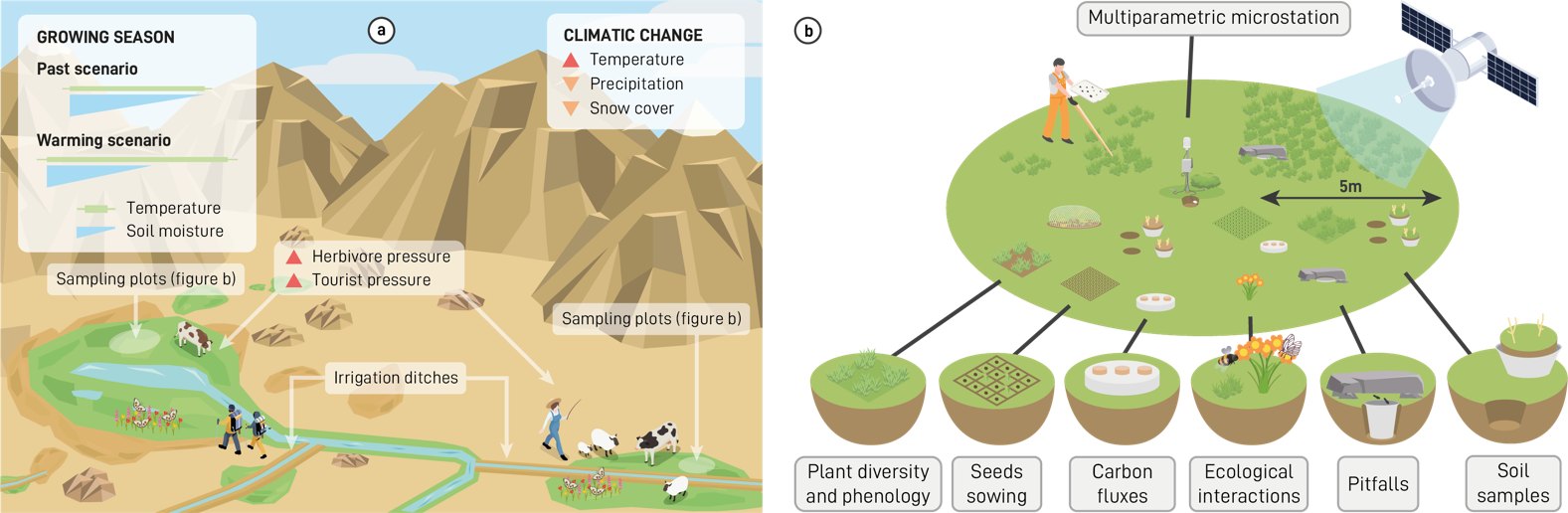
Historical irrigation ditches are a sign of identity of many mountains, but the lack of profitability has led to their deterioration and abandonment. These systems sustain high biological diversity (endemic species and habitats) and agricultural diversity (crops, pastures), maintain soil fertility and regulate the water cycle — a paradigmatic green and blue infrastructure that creates large-scale ecological corridors.
They provide:
- water regulation, increasing the duration and availability of water in the basin;
- pasture and crop production, contributing to food sovereignty;
- resilience and adaptation to social, environmental and political change;
- prevention of erosion and landslides through optimal plant cover; and
- a living cultural heritage with a strong influence on local culture and economy.
Hypothesis: many plants and animals will benefit from the “surplus” moisture provided by irrigation ditches, maintaining biological activity throughout the dry summer and providing enough food for livestock.
2 · Natural regeneration of endemic and rare plants
High-mountain wet meadows and snowbed grasslands harbour megadiverse communities. We will preserve and restore populations of endemic and rare herbaceous and woody species by mimicking natural seed dispersal and the spatial pattern of recruitment, from the microhabitat to the landscape scale.
- Combine the ecosystem service of seed dispersal with the extra soil moisture provided by irrigation ditches.
- Compare active restoration through seed sowing versus seedling planting in wet microhabitats along streams, ditches and snowbeds.
- Work with volunteers, park managers and local germplasm banks, following an adaptive-management monitoring plan.
3 · Herbivory management as a biotic filter
Livestock and wild ungulates are a constant in high-mountain grasslands, and drought will concentrate them in the remaining wet patches. Herbivory can be harmful — excessive consumption, trampling or fertilisation, dispersal of lowland exotic seeds — but it can also be positive: grazing dominant species favours the coexistence of subordinate, rare and often endemic plants; trampling opens gaps for recruitment; and droppings fertilise the soil and disperse seeds.
Managing herbivore pressure is therefore essential to keep wet-meadow communities hyper-diverse while avoiding overexploitation. We will use small paired exclosures (at least three per meadow, each with its control) and, where possible, virtual fencing.
Evaluating NbS: recovery pathways
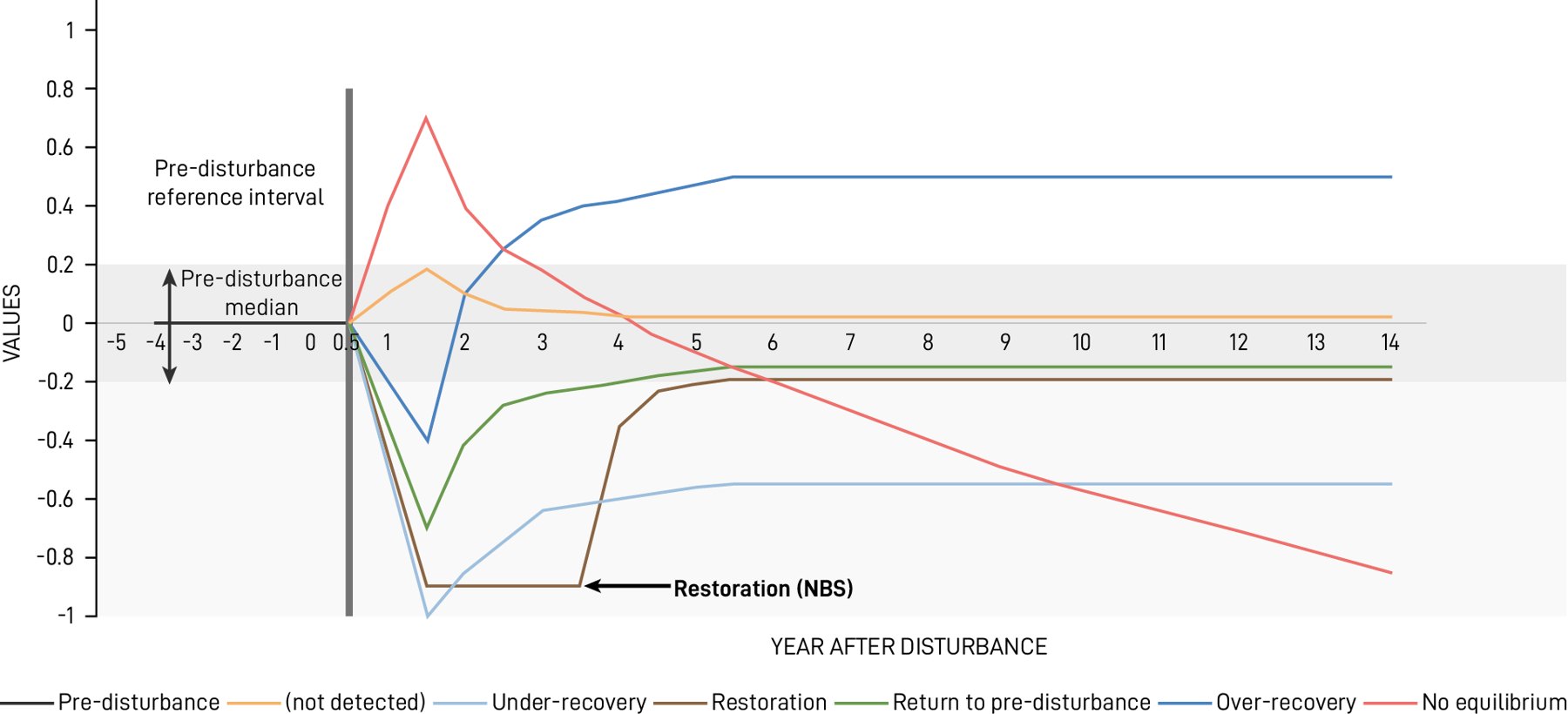
All NbS follow an adaptive management approach — co-designed actions, control plots and follow-up monitoring — instead of traditional management without monitoring. Their effects on composition, structure and function are analysed with the protocols of WP1, and their trade-offs and synergies are assessed in WP2.
