Welcome to the PRESINMED website
The new home of the project: objectives, work packages, study sites, team and — soon — results from the field.
Nov 9, 2026
Biodiversa+ · BiodivNBS 2023–2024 · 2025–2028
A Nature-based Solutions approach to diagnose, protect and restore wet meadows and snowbed grasslands across five mountain regions of Southern Europe and North Africa.
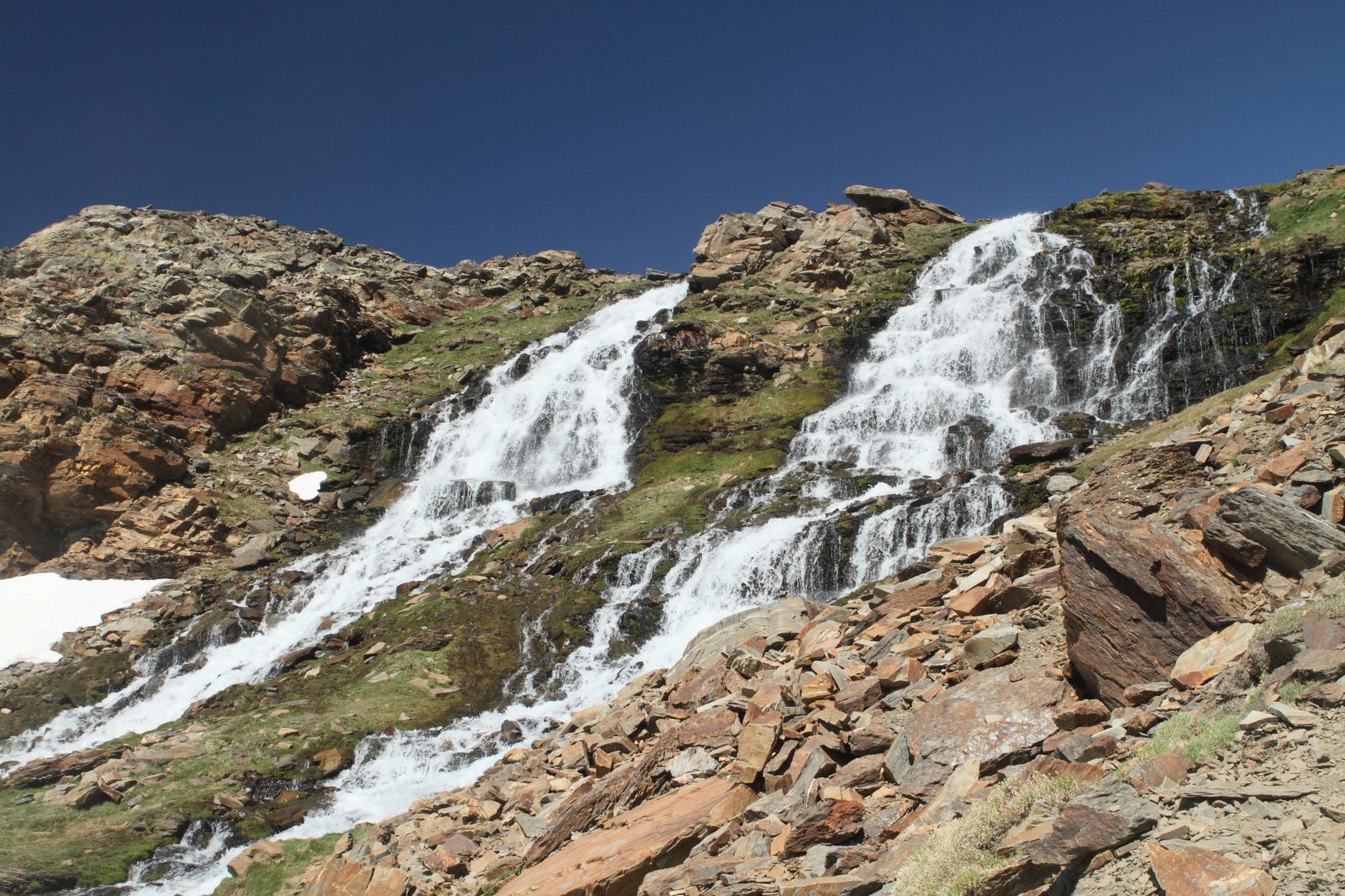
Sierra Nevada, Spain. Photo: Bouke ten Cate · CC BY 4.0
5 mountain regions
7 protected areas
4 countries
8 partner institutions
3 work packages
36 months
Why wet meadows?
Mountains cover a quarter of the emerged land yet hold more than 85% of the world’s mammal, amphibian and bird species, and Mediterranean mountains are hotspots of endemic plants. Their high-mountain wet meadows and snowbed grasslands are tiny, moisture-dependent habitats that concentrate an extraordinary share of this diversity.
They also deliver services far beyond their size:
The challenge
Climate change is turning the winter–summer transition faster and harsher. As snow cover shrinks and summer drought lengthens, wet meadows contract, become isolated in a dry matrix — and the remaining green patches attract ever more animals and people.
Rising temperatures, less precipitation and shorter snow cover reduce water inputs in spring and summer, shortening the growing and reproductive period of plants, animals and soil microbes.
Livestock and wild ungulates crowd into the last green patches: consumption, trampling, fertilisation and dispersal of exotic seeds increase exponentially per square metre.
Visitors also seek wet, green and gentle slopes, bringing trampling, small shelters, litter and micro-plastics to the most fragile habitats.
Our guiding hypothesis. Warming — and above all the loss of water and snow — will affect wet meadows and snowbed grasslands differently across mountains: ranges with a more temperate, rainy summer should be less affected than those with a more Mediterranean, semi-arid climate.
Our approach
We combine field monitoring, remote sensing and artificial intelligence to diagnose the health of wet meadows, and we test site-specific Nature-based Solutions together with park managers, livestock farmers, local communities and tourism businesses.
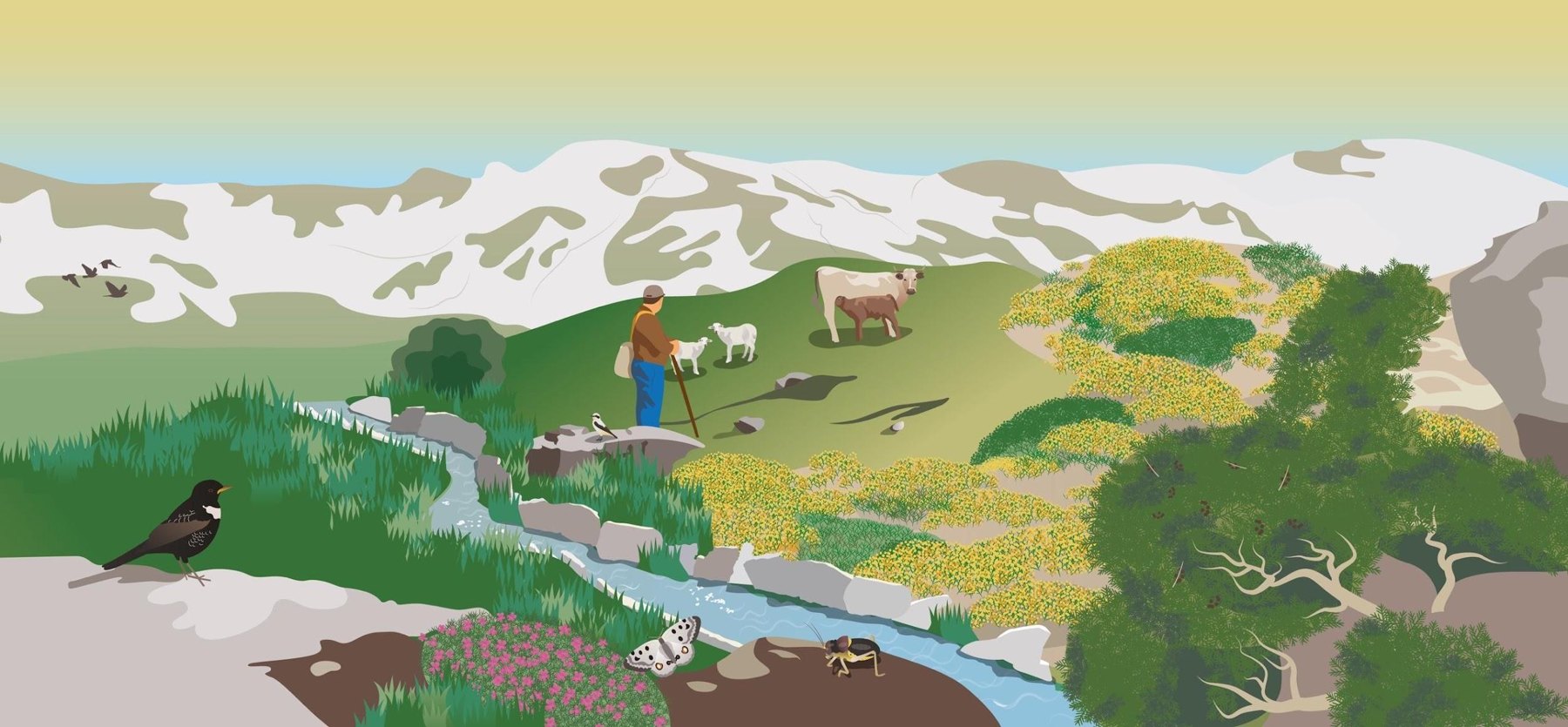
Restoring historical mountain irrigation ditches — green-blue infrastructures that extend moisture through the dry summer.
Sowing and planting endemic and rare species mimicking natural seed dispersal and recruitment microhabitats.
Managing grazing as a biotic filter that keeps meadows diverse, using exclosures and virtual fencing.
Where we work
From the Alps to the High Atlas, our sites span a broad gradient of climate, substrate, grazing and tourist pressure — a natural experiment to generalise results across Mediterranean and semi-arid mountains.
Work plan
01 Work package 1
Field sampling, remote sensing and AI to assess the health of wet meadows under drought, herbivory and tourism.
Lead: UC · UGR
02 Work package 2
Pilot restoration, mitigation and adaptation measures under adaptive management, and their trade-offs and synergies.
Lead: UNIMOL · UGR
03 Work package 3
Stakeholder co-design, ecosystem-service models and a decision-support tool for scientists, managers and citizens.
Lead: UGR
News

PRESINMED is funded through the 2023–2024 Biodiversa+ joint call for research proposals “Nature-based solutions for biodiversity, human well-being and transformative change” (BiodivNBS), with the national funders of the participating countries. Biodiversa+ is the European Biodiversity Partnership, co-funded by the European Commission.